MY FATHER GAVE MY GRADUATION INVITATION TO MY STEPSISTER AND SHOVED ME INTO THE RAIN
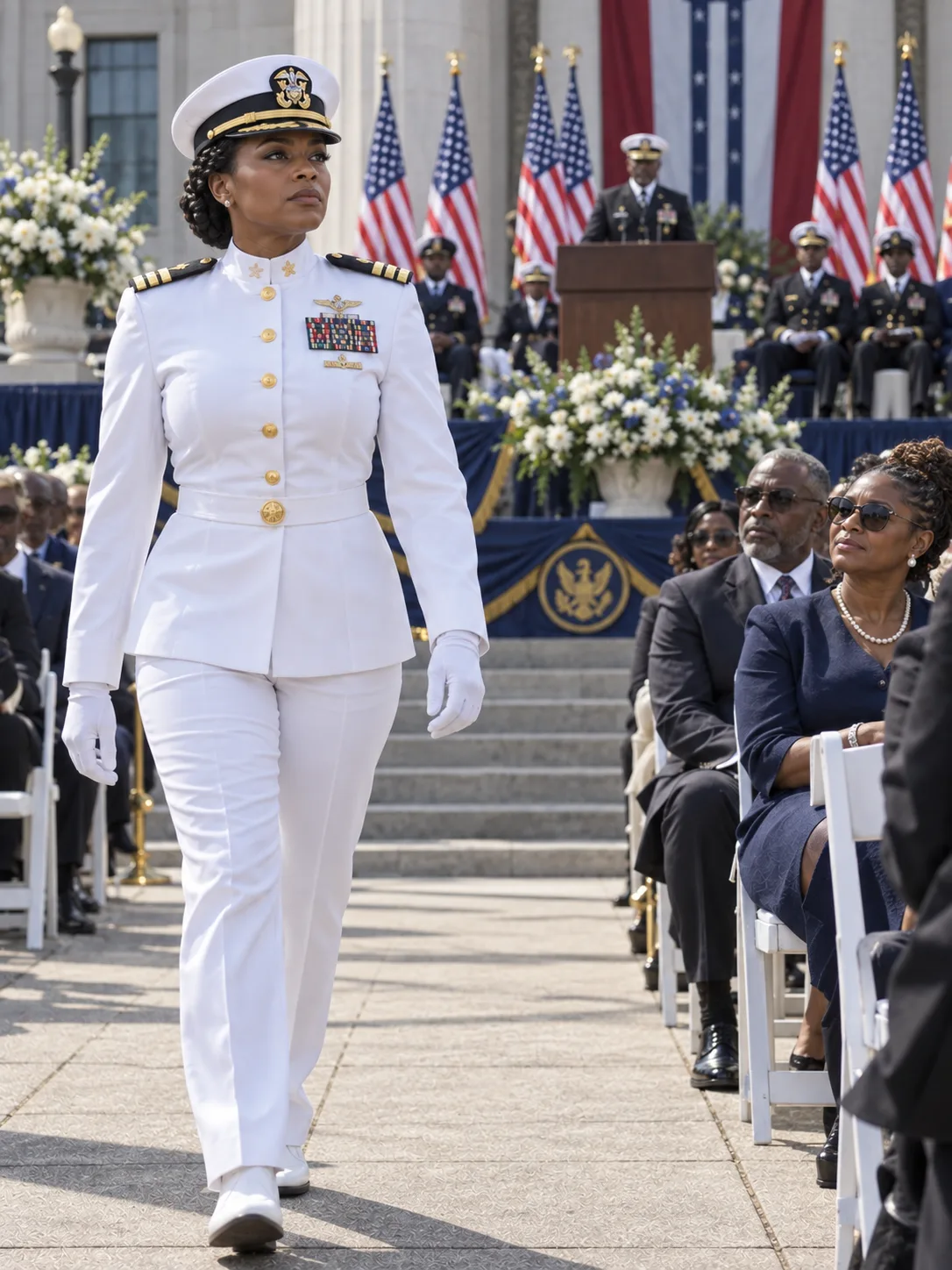
My stepmother tried to smooth it over — she’s good at smoothing things over — and my stepsister, to her small credit, looked genuinely ashamed, holding the invitation she’d posed with, understanding at last that it had never been a prop. But there was nothing to smooth. My father had drawn the map of our entire relationship in front of four hundred people that morning, in the rain, with his hand on my arm, and it ended with generals rising for the daughter he’d thrown out.
Chapter 5: The Officer I Became
That was four years ago.
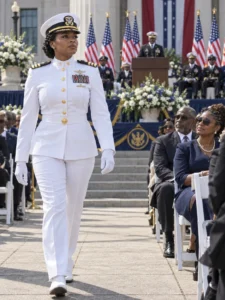
I’m an officer now, and a good one, moving up, doing the work I broke myself in that academy to earn. The medal my father didn’t know about opened doors, and I’ve walked through every one, and not one of them required the belief of the family that withheld it when it would have meant everything.
I don’t have a relationship with my father. He reached out, in the months after — warmly, suddenly, the way a man reaches out once he’s discovered his overlooked daughter turned out to be worth knowing. That warmth arrived precisely when my achievements became useful to him, and it was, honestly, more insulting than the rain. A love that switches on the moment you succeed isn’t love. It’s a man realizing he backed the wrong horse and trying to buy a ticket on the right one. I declined to be bought.
My stepsister and I have, strangely, made a kind of peace. She was raised to be the family’s star, which required a plain daughter to overlook, and she played the role she was handed — but she was the only one who looked ashamed that day, and shame, at least, is a door. We’re not close. But she once told me, quietly, that watching generals rise for me was the day she started wondering what else our parents had been wrong about. I’ll take it.
I did the thing I most needed to do: I stopped waiting to be noticed by the people who decided not to. That waiting had shaped my whole childhood — the endless hope that if I just achieved enough, they’d finally see me. They never did, and the morning I stood on that stage, I finally understood they never would, and the strange gift of being shoved into the rain was that it cut the last thread of that hope. You cannot be pushed out of a building you’re about to be celebrated inside of and keep believing the people who pushed you are the ones whose eyes you need.
I mentor young cadets now — especially the overlooked ones, the ones doing the work in the dark while someone else gets the light, the ones told they’re one of four hundred by the people who should have believed in them first.
Here’s what I learned, standing in the rain, ninety seconds from a bus home.
The people who call you one of four hundred are telling you the size of their attention, not the size of your worth. My father looked at a first-in-her-class cadet with the academy’s highest honor and saw an embarrassment in a wet coat, because seeing me clearly would have required a curiosity he never had. And the lesson I carry is this: do the work for yourself, not for their eyes, because the people who overlooked you will not be in the front row when you rise — and the day you stop needing them there is the day you’re finally free.
My father gave my invitation away because he was sure nobody would notice me.
Half the room had come to notice me.
He shoved me into the rain and called me an embarrassment.
Four hours later, a hall full of generals rose to their feet.
He stole the seat I’d have given to someone who loved me,
and from a stage, in front of everyone,
he finally learned the name of the daughter he’d left standing in the storm—
first in her class,









Post Comment